Elon Musk’s $100 Billion OpenAI Bid: Shaping AI’s Future
Илон Маск предлагает $100 млрд для OpenAI, что может кардинально изменить будущее искусственного интеллекта.
Elon Musk’s $100 Billion Bid for OpenAI: A Game-Changer in AI’s Future
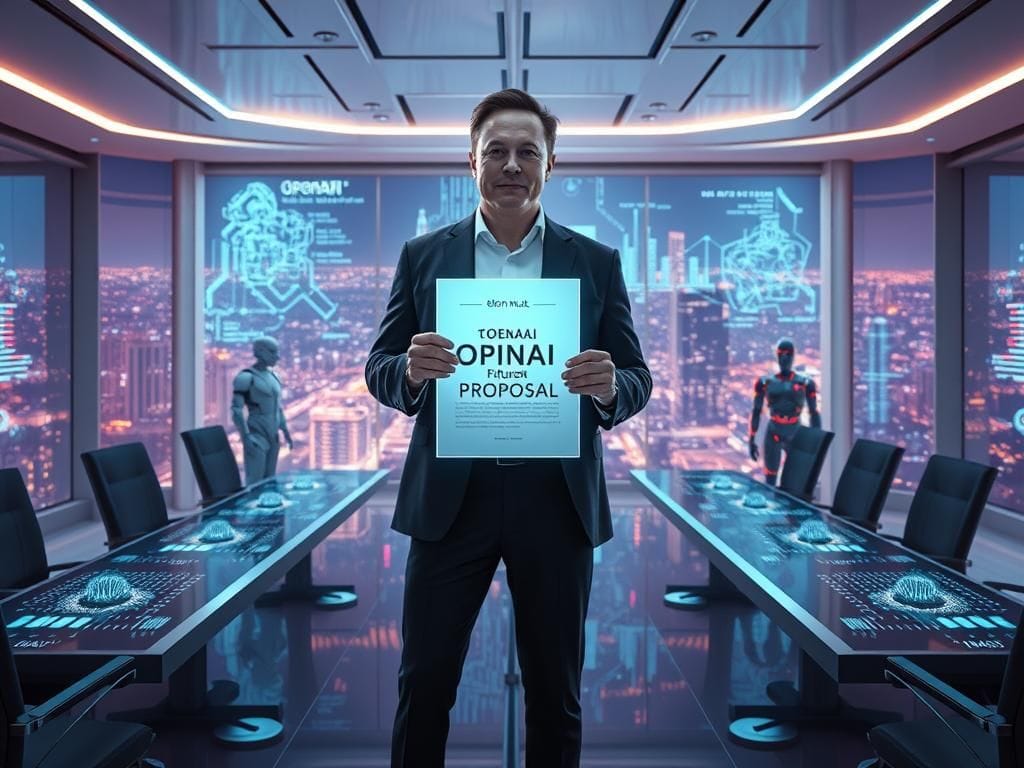
Elon Musk’s latest move has sent shockwaves through the tech world: a jaw-dropping $97.4 billion offer to acquire OpenAI, the powerhouse behind ChatGPT. This isn’t just another headline—it’s a bold statement of intent, a play to redefine the future of artificial intelligence. But what does this mean for the industry, and why is OpenAI such a coveted prize? Let’s dive in.
Why OpenAI? The Value Behind the Bid
Musk’s proposal comes at a pivotal moment in AI history. Since its inception in 2015, OpenAI has risen to the forefront of artificial intelligence, with ChatGPT becoming a household name. By 2024, ChatGPT is expected to reach 300 million weekly users—a staggering figure that underscores its global influence. The company’s $100 billion valuation isn’t just a number; it’s a reflection of its transformative potential.
This isn’t merely about owning a cutting-edge tool. It’s about shaping the future. OpenAI’s innovations have already redefined the AI landscape, making it a magnet for tech giants and investors alike. Musk’s bid isn’t just ambitious—it’s a calculated move to secure a strategic foothold in a sector that’s evolving at breakneck speed.
Musk’s Vision: From xAI to Dominance in AI
Elon Musk’s fascination with AI is no secret. With a net worth of $392 billion, he’s been a vocal advocate for responsible AI development. Though he stepped away from OpenAI’s board in 2018, his interest in the company’s progress has never waned. In 2023, he launched xAI, a research firm now valued at $50 billion. This bid for OpenAI isn’t just a standalone move—it’s part of a grander strategy to consolidate AI advancements under his leadership.
But there’s more to it. Microsoft’s $14 billion investment in OpenAI over the past five years has set the stage for a high-stakes rivalry. By pursuing this acquisition, Musk isn’t just entering the AI race—he’s aiming to dominate it. Could this reshape the dynamics of tech giant mergers? Absolutely.
Sam Altman’s Resistance: A Complex Decision
Sam Altman, OpenAI’s CEO, has reportedly rejected Musk’s offer. With a net worth of $1.2 billion, Altman’s decision isn’t just about money—it’s about vision. OpenAI’s involvement in the Stargate project, a $500 billion collaboration with Oracle and international investors, likely plays a role in his reluctance to sell.
This isn’t just a business deal; it’s a clash of philosophies. Altman’s resistance highlights the complexities of high-stakes negotiations and the challenge of aligning divergent visions for AI’s future.
What This Means for the AI Landscape
Musk’s $100 billion bid could have far-reaching implications for the AI industry. If successful, it might accelerate the development of advanced technologies, potentially integrating ChatGPT with Musk’s ventures like Tesla, Neuralink, and SpaceX.
But it also raises critical questions. Could such a merger stifle competition in an industry that thrives on innovation? While consolidation might streamline resources, it could also limit the diversity of ideas driving AI forward. As the sector evolves, the outcome of this bid will shape the trajectory of AI development.
A Turning Point for AI and Tech
Elon Musk’s $97.4 billion offer to acquire OpenAI is more than a headline—it’s a defining moment in the tech and AI sectors. Whether the deal goes through or not, it underscores the immense value of artificial intelligence in shaping the future. Musk’s strategic investments highlight his commitment to leading this transformative field.
As the race to dominate AI intensifies, one thing is clear: the impact of this bid will resonate far beyond the boardroom. Could Musk’s vision redefine the AI landscape, or does it risk narrowing the path to progress? The answers may shape the future of technology itself. What’s your take on this? Let’s keep the conversation going.